Mental Toughness on the Mountain: Building the Inner Game That Actually Matters
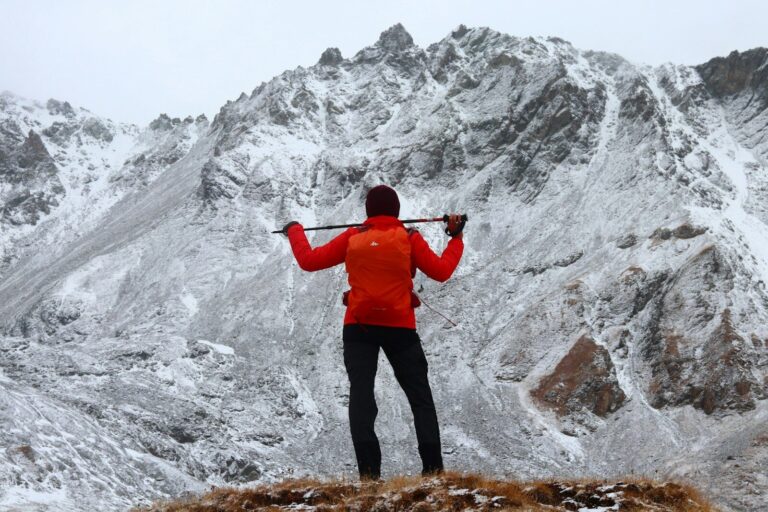
There is a section on a Colorado 14er I used to help guide that I privately called the ugly half mile. It is not steep, not technically demanding, and not particularly exposed. It is a scree field at 13,500 feet where every step sinks two inches before the footing catches, the altitude sits on your chest like a mild but constant pressure, and the summit still looks improbably far above despite two hours of sustained climbing. I watched more clients turn around at this section than anywhere else on the route, and the honest assessment in nearly every case was that they were physically capable of continuing. They were not mentally prepared for that specific kind of difficulty.
Physical training for mountain climbing gets enormous coverage in outdoor media and fitness culture. Mental preparation for the same activity gets almost none, despite the fact that experienced mountaineers across disciplines consistently identify psychological factors as the primary determinant of outcomes on serious objectives. The body is frequently capable of more than the mind is willing to sustain. Training the mind is at least as important as training the legs, and far less often discussed in practical terms.
Defining the Skill Set
Mental toughness in a mountain climbing context is not bravado or the willful suppression of discomfort. That kind of performance generates bad decisions and real injuries. The genuine skill set has three distinct components.
The first is discomfort tolerance: the capacity to continue functioning effectively, making good decisions and moving efficiently, while experiencing significant physical discomfort without allowing that discomfort to override judgment. At 13,500 feet on a cold, windy scree field, your body is generating a continuous stream of signals suggesting that stopping would feel better than continuing. Discomfort tolerance is the ability to hear those signals, process them accurately, and continue anyway when the assessment is that continuing is the right choice.
The second is decision quality under stress. Summit fever, the phenomenon of letting emotional investment in a summit override accurate assessment of conditions, team strength, and time, is real and kills people every year. The opposing failure, anxiety-driven retreat from a position where the actual risk is manageable, costs people significant objectives and erodes confidence in ways that compound over time. Neither error is a fitness problem. Both are decision-making failures produced by emotional states overwhelming accurate information processing.
The third is fear management: the ability to process fear as information rather than as a directive. Fear of a particular move, a particular weather sign, a particular piece of terrain, is often genuinely useful data that should influence behavior. Anxiety about what might happen on terrain that does not yet present an actual threat is generally not useful data. Learning to distinguish between them in real time, under physical stress and physiological impairment from altitude, is a skill that takes deliberate development.
Training Discomfort Tolerance
Discomfort tolerance is trainable through voluntary exposure to the specific types of discomfort that mountain environments produce. Cold exposure training: spend time deliberately in cold weather, not just enduring it while getting from one warm place to another but actively learning how cold affects your motivation, your decision-making, and your body’s actual functional capacity. Most people raised in climate-controlled environments have never been genuinely cold for extended periods and do not know how they respond to it.
Prolonged physical effort at low intensity is the specific adaptation you are chasing for mountain climbing. The discomfort of a twelve-hour mountain day is not the acute agony of a hard training interval; it is the accumulated weight of many hours of sustained moderate-intensity movement with a load when you are past the point where it feels good. Back-to-back training days, where day two begins with the residual fatigue of day one, simulate this better than any single training session can.
Deliberate stress inoculation through mild discomfort training: cold showers, extended fasting before training sessions, early morning training at 4 AM to normalize disrupted sleep patterns, training with a simulated load in poor weather when you have the option to skip. None of these are pleasant. All of them build the specific tolerance for chosen discomfort that mountain climbing demands.
Improving Decisions Under Stress
Pre-commitment is the most reliable tool against summit fever. Before you leave camp for any summit attempt, decide specifically and explicitly what will cause you to turn around: a particular time, a particular weather sign, a particular condition in a team member. Write it down. Tell your partner. Make the decision while you are calm, rested, and not yet invested in the outcome of that day’s effort. Then follow it when the moment arrives, even when the summit looks close and your emotional state is pushing hard for a different choice.
Anxiety management in the field is improved by a cognitive technique called defusion: creating deliberate psychological distance from an anxious thought rather than engaging with it directly. When anxiety says you cannot do this, defusion rephrases: you are noticing a thought that says you cannot do this. The thought is an event in your mind, not a fact about the terrain in front of you. That small distinction, made deliberately in the moment, creates enough space between the thought and your behavioral response to allow accurate assessment to enter the process.