10 Signs Your Cat Is Secretly Stressed and How to Fix It
Your Cat May Be Stressed Right Now and You Might Not Know It
Cats are masters of disguise. Unlike dogs, they rarely make their discomfort obvious, which means stress can build quietly for weeks before you notice anything wrong. If your cat has started hiding more, eating less, or grooming obsessively, those aren’t random quirks — they’re messages. This guide covers the 10 signs your cat is secretly stressed and, more importantly, what you can actually do about each one.
Why Cat Stress Matters More Than You Think
Chronic stress in cats doesn’t just affect their mood. It suppresses immune function, contributes to urinary tract disease, and can trigger or worsen conditions like feline idiopathic cystitis. A stressed cat is a cat at higher medical risk. Catching the behavioral signs early is the fastest, cheapest way to protect your pet’s health.
The 10 Signs Your Cat Is Secretly Stressed
1. Hiding More Than Usual
Every cat enjoys a quiet spot, but a stressed cat disappears. If your normally social cat is spending entire afternoons under the bed or inside a closet, that withdrawal is a red flag. New people in the house, a recent move, or even rearranged furniture can trigger this.
Fix it: Don’t coax them out. Instead, place a worn T-shirt of yours near their hiding spot so they associate safety with your scent. Give them a few days to decompress without forced interaction.
2. Overgrooming or Bald Patches
A stressed cat may lick one area — often the belly, inner thighs, or base of the tail — until the fur is thin or gone entirely. This is called psychogenic alopecia. It looks like a skin problem but starts in the brain.
Fix it: Rule out parasites and allergies with a vet visit first. If the cause is behavioral, environmental enrichment and, in severe cases, anti-anxiety medication prescribed by a vet can interrupt the cycle.
3. Changes in Litter Box Habits
Urinating outside the box, going more frequently, or straining are classic stress responses — especially in male cats. The urinary tract is genuinely sensitive to stress hormones in felines. Don’t dismiss this as spite.
Fix it: Have your vet check for a urinary infection or blockage first. Then evaluate the litter box setup: one box per cat plus one extra, scooped daily, placed away from feeding areas and loud appliances.
4. Increased Vocalization
If your cat is suddenly yowling at night or meowing far more than normal, especially in a cat that was previously quiet, anxiety is a likely cause. Senior cats can develop cognitive dysfunction that mimics this, so age matters here.
Fix it: Increase interactive play before bedtime to burn off nervous energy. If your cat is over 10, ask your vet about cognitive decline screening.
5. Aggression Toward People or Other Pets
A cat that hisses, swats, or bites when it didn’t before is telling you something is wrong. Redirected aggression is particularly common — your cat sees something stressful through the window and takes it out on whoever is nearby.
Fix it: Identify the trigger. Block window access temporarily if outdoor cats are the culprit. Reintroduce housemates slowly using scent swapping before visual contact if inter-cat tension is the issue.
6. Appetite Changes
Stress can cause a cat to eat noticeably less or, less commonly, more. A cat that skips two consecutive meals deserves attention. Cats that go without food for more than 48 hours are at risk for hepatic lipidosis, a serious liver condition.
Fix it: Maintain a consistent feeding schedule. Warm wet food slightly to increase palatability. If appetite doesn’t return within 48 hours, call your vet.
7. Excessive Scratching
Scratching is normal. Frantic, repetitive scratching on new surfaces — especially after a change in the household — signals stress. Cats scratch more when they feel the need to mark territory because something has threatened their sense of ownership of the space.
Fix it: Place new scratching posts near areas the cat is targeting. Feliway Classic diffuser plug-ins (synthetic feline facial pheromones) can reduce territorial anxiety within a few days of use.
8. Flattened Ears and Tucked Tail as a Default Posture
A relaxed cat holds its ears forward and tail loosely. If your cat consistently carries its ears sideways or flat and keeps its tail low or tucked when moving around the house, it is in a low-level state of chronic fear. Many owners miss this because the cat isn’t hissing or hiding.
Fix it: Map out when this posture appears — specific rooms, times of day, or around specific people. Eliminating the stressor, even partially, often produces visible improvement within a week.
9. Diarrhea or Vomiting Without a Medical Cause
The gut-brain connection is real in cats. Intermittent soft stools or occasional vomiting that your vet cannot attribute to diet, parasites, or disease may be stress-related. Keep a simple log of when episodes happen alongside household events.
Fix it: Probiotics formulated for cats can help stabilize gut flora during stressful periods. Ask your vet about FortiFlora or similar products. Also work on reducing the underlying stressor.
10. Staring at Walls or Appearing Mentally Absent
This one is easy to dismiss as typical cat weirdness. But a cat that frequently sits facing a wall, stares blankly, or seems mentally checked out — especially combined with any of the above signs — may be dealing with anxiety that has become overwhelming.
Fix it: Enrich the environment meaningfully. Rotate toys every three to four days. Add a window bird feeder to give the cat something real to focus on. Consider a vet consultation about low-dose anxiety support if multiple signs are present.
A Practical Stress-Reduction Plan You Can Start Today
Addressing cat stress isn’t a single fix — it’s a combination of environmental changes, routine, and sometimes veterinary support. Here’s a straightforward starting point:
- Audit the environment: Identify recent changes — new pet, new person, moved furniture, new schedule.
- Add vertical space: Cat trees and wall shelves let cats survey their territory from above, which reduces anxiety significantly.
- Establish a predictable routine: Feed, play, and groom at consistent times. Cats are highly sensitive to schedule disruption.
- Use pheromone products: Feliway diffusers and sprays are not a cure-all but genuinely reduce ambient stress in most cats within two weeks.
- Increase interactive play: Two 10-minute wand-toy sessions per day satisfies predatory instincts and burns stress hormones.
- Create a safe room: During renovations, parties, or other disruptions, set up one room with familiar bedding, food, water, and a litter box so your cat has a retreat that belongs entirely to them.
- Consult your vet: If signs are severe or have lasted more than two weeks, discuss options including behavioral consultation or short-term medication. There’s no shame in it — it’s standard medicine.
When to See a Veterinarian
Several of these signs — litter box changes, appetite loss, vomiting, hair loss — overlap with medical conditions that need diagnosis before you assume stress is the cause. Always rule out physical illness first. A behavioral problem is a diagnosis of exclusion in veterinary medicine. If your cat shows multiple signs from this list, a vet visit is the right first step, not the last resort.
What Long-Term Calm Actually Looks Like
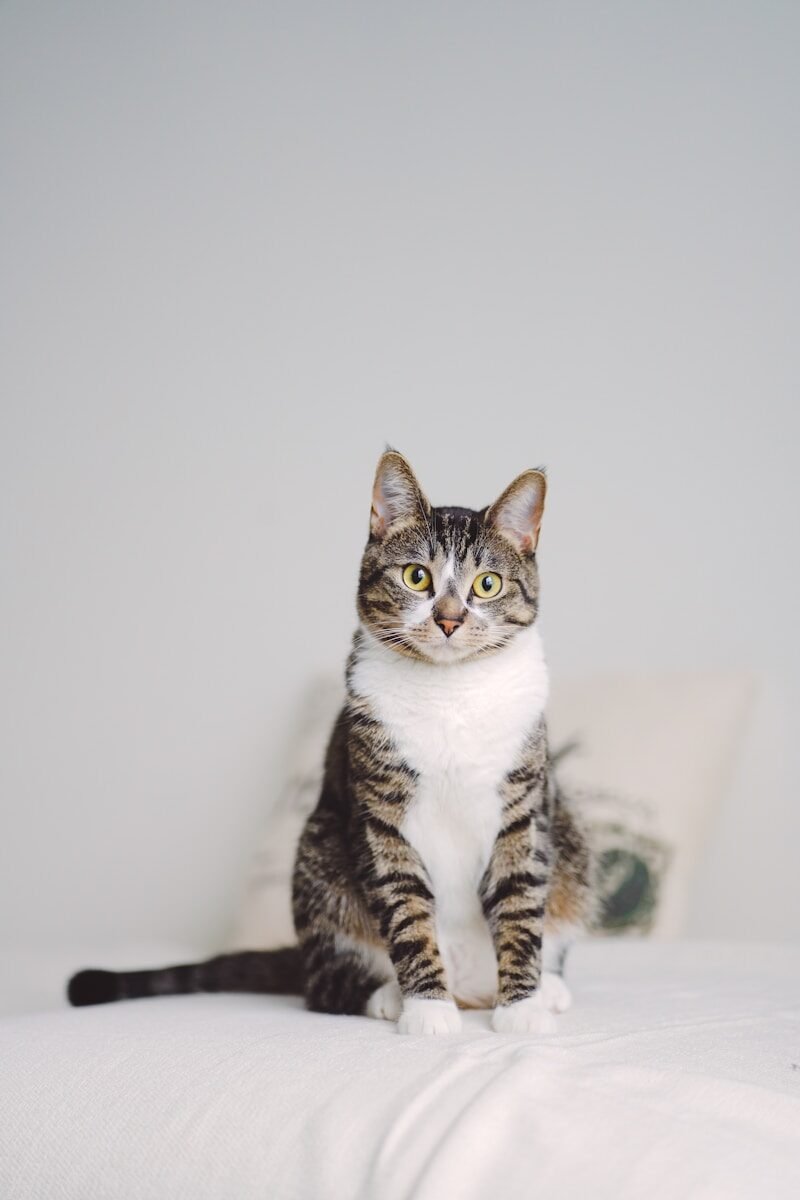
A genuinely relaxed cat slow-blinks, kneads, sleeps in open spaces rather than always hiding, eats consistently, and approaches people voluntarily. These aren’t personality quirks reserved for especially mellow breeds — they’re the baseline for a cat whose stress load is manageable. Most cats can get there with the right adjustments. The key is catching the signs early, taking them seriously, and making changes systematically rather than all at once, which can itself be overwhelming for an anxious cat.